Modeling Moving Carbon
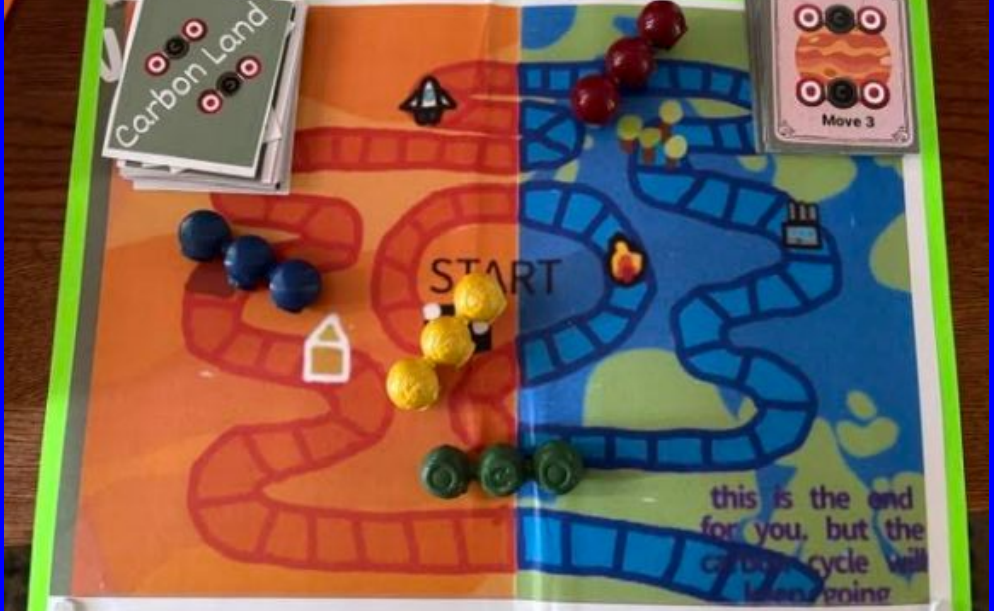
Students explore what carbon is and how it moves and changes on Earth and Venus. They use a carbon story card sort, two rounds of a carbon cycle game, and a fructose photosynthesis model before creating a local carbon cycle model and a Venus carbon cycle game.
This lesson was developed as part of the Northwest Earth and Space Sciences (NESSP) ROADS from Earth to Venus Student Challenge and Companion Course.
Grades 3 to 12 | 420 minutes classroom time
⏱ Total Time
420 min
🎓 Grade Band
Grades 3 to 12
📦 Materials
Carbon game + model supplies
🧭 Standards
NGSS, ELA, and Math
Teacher Note: If students have significant prior knowledge of the carbon cycle, you may be able to combine the two rounds of the carbon cycle game (Explore) into one by pausing the game, explaining the switch, then switching the Fossil fuel cards part way through.
Downloads & Resources
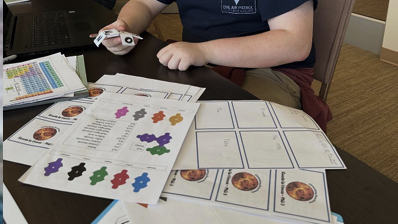
Basic materials: printed or electronic card sets, carbon cycle station cards, dice, student handouts, bingo chips in three colors, baggies, fructose model cards, flashlights, and access to Venus research resources.
Google / Online Files
- Student Pages
- Carbon Cycle Game (Round 1, Round 2)
- Fructose Model (Online version)
Microsoft / Downloadable Files
- Student Pages
- Carbon Cycle Game (Round 1, Round 2)
- Fructose Model (Digital version)
Standards Alignment
View Grades 3–5 alignment
- NGSS: 5-PS3-1, 5-LS1-1, 5-LS2-1, 4-ESS3-1
- Science Practices: Developing and Using Models; Constructing Explanations and Designing Solutions
- Crosscutting Concepts: Energy and Matter; Systems and System Models; Scale, Proportion, and Quantity
View Middle School alignment
- NGSS: MS-LS2-3, MS-ESS3-3, MS-ESS3-4, MS-ESS3-5
- Science Practices: Developing and Using Models; Obtaining, Evaluating, and Communicating Information
- Crosscutting Concepts: Energy and Matter; Systems and System Models; Scale, Proportion, and Quantity
View High School alignment
- NGSS: HS-LS1-5, HS-LS1-6, HS-LS1-7, HS-LS2-5, HS-ESS3-6
- Science Practices: Developing and Using Models; Obtaining, Evaluating, and Communicating Information
- Crosscutting Concepts: Energy and Matter; Systems and System Models; Scale, Proportion, and Quantity
Lesson Summary
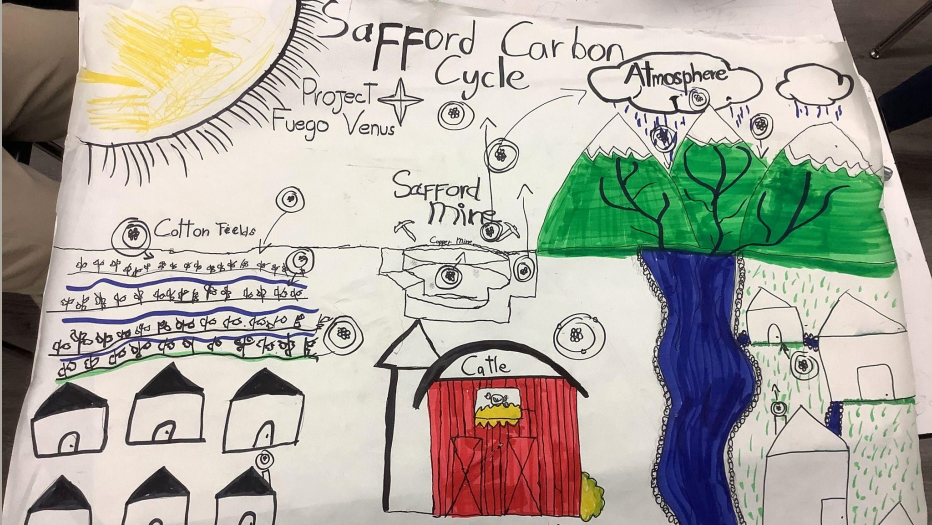
Students begin by arranging a card set to tell a story about carbon moving and changing in a tree. They then use two carbon cycle game models and a fructose photosynthesis model to explore carbon at both macro and micro scales. Students apply these ideas by creating a local carbon cycle model or carbon story card set, then research Venus to design a Venus version of the carbon cycle game.
🚀 Engage
Students organize a card set to tell a carbon-related story and share their initial ideas about how carbon moves and changes.
Estimated time: 30 min
🔍 Explore
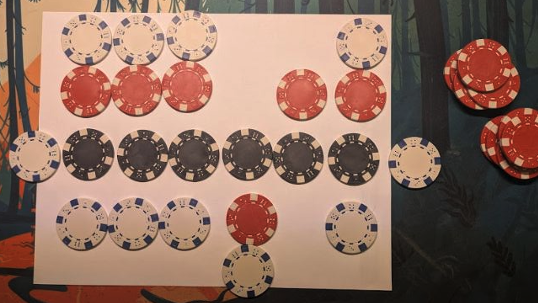
Students play two rounds of a carbon cycle game and build a fructose photosynthesis model to compare carbon movement at macro and micro scales.
Estimated time: 135 min
💡 Explain
Students connect the card sort, carbon cycle game, and fructose model, then create a local carbon cycle model or a local carbon story card set.
Estimated time: 120 min
🧩 Elaborate
Students research conditions on Venus and use evidence to create a Venus version of the carbon cycle game.
Estimated time: 90 min
✅ Evaluate
Students document their local carbon cycle work and their Venus carbon cycle game with explanations and justifications.
Estimated time: 30 min